
A funny story about Einstein, his chauffeur and the General Theory of Relativity.
https://medium.com/@MarkJAttard/when-you-dont-know-what-you-re-talking-about-f7880fd10879?source=linkShare-57bf32bb736d-1465781900

13 Monday Jun 2016
Posted in Uncategorized
A funny story about Einstein, his chauffeur and the General Theory of Relativity.
https://medium.com/@MarkJAttard/when-you-dont-know-what-you-re-talking-about-f7880fd10879?source=linkShare-57bf32bb736d-1465781900
05 Sunday Jun 2016
Posted in Uncategorized
Read about Timbercorp’s recent setback in the Court of Appeal
https://medium.com/@MarkJAttard/timbercorp-loses-appeal-2f7b655478c3?source=linkShare-57bf32bb736d-1465135368
04 Saturday Jun 2016
Posted in Uncategorized

Everyone’s worst nightmare
https://medium.com/@MarkJAttard/internet-banking-scam-1679231e88dc?source=linkShare-57bf32bb736d-1465035283
04 Saturday Jun 2016
Posted in Uncategorized

Ash Brazill plays with the Australian Diamonds netball team.
This is a video of her wedding. She married her long time partner Brooke Grieves.
“From the moment I met you, you have surprised me, distracted me, captivated me and challenged me in a way that nobody had,” Ash returned her own vows. “I promise to take you seriously when you need to be taken seriously, and laugh with you for the rest of the time.
“I promise to get up and check that every door in the house is locked when you hear a noise outside, and I promise to never go to bed angry and I promise to tell you every single morning how beautiful you look. I promise to be your somebody to dance with when Whitney comes on, and sing all of the boy duets when I am needed.”
What is frustrating is that their marriage isn’t recognised in this country.
There is a rally for equal marriage rights in Melbourne on 25 June
https://medium.com/@MarkJAttard/beautiful-but-illegal-c8a07b300d6c?source=linkShare-57bf32bb736d-1465020843
31 Tuesday May 2016
Posted in Uncategorized

Government caught in cover up
https://medium.com/@MarkJAttard/reef-in-danger-c35323b78185?source=linkShare-57bf32bb736d-1464696533
31 Tuesday May 2016
Posted in Uncategorized

This is what sport is all about.
A story to inspire young people everywhere.
31 Tuesday May 2016
Posted in Uncategorized

A recent edict against the wearing of wigs has upset some barristers in Victoria.
https://medium.com/@MarkJAttard/wigs-or-not-49d9405ca20d?source=linkShare-57bf32bb736d-1464686275
29 Sunday May 2016
Posted in Uncategorized

Why is gluten important? Or is it?
https://medium.com/@MarkJAttard/why-gluten-63daa3328eec?source=linkShare-57bf32bb736d-1464530048
29 Sunday May 2016
Posted in Law, life and levity
Mark Gungor is an expert in relationships and personalities. He is one of the most sought after public speakers in the US because he delivers his message in a plain talking and comedic manner.
Below Gungor explains to us, what deep down we already knew, namely that men and women are wired differently.
Have you ever watched a presentation or read an article that perfectly sums up your understanding and intuition on a subject? Well this is one such presentation. Must see.
Watch, laugh and learn.
https://medium.com/@MarkJAttard/the-difference-between-mens-and-women-s-brains-9827d0842682?source=linkShare-57bf32bb736d-1464525950
29 Sunday May 2016
Posted in Uncategorized
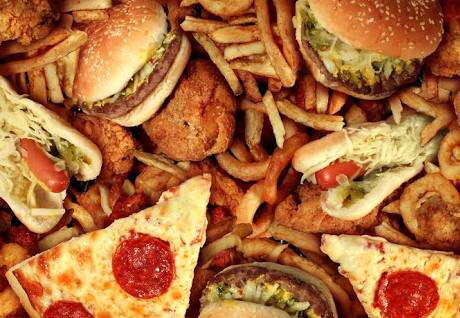
(Pollan on cooking) “But even better, I found, is the satisfaction of temporarily breaking free of one’s accustomed role of producing the one thing – whatever it is you sell into the market – and being the passive consumer of everything else.”
This is the second article I draw from Michael Pollan’s book “Cooked”. Today we look at why “cooking” is being replaced with industrialised food processing.
Research has confirmed that in Western economies all over the world, people are cooking less and buying more prepared meals. By “cooking” we mean combining a number of ingredients to make a meal, we do not mean placing a plastic wrapped meal in the microwave oven and heating for the required time or heating a frozen pizza.
On average in the US, the average household spends 27 minutes a day on food preparation. That’s less than half the time spent on cooking in 1965. This isn’ t all bad news, as modern industry has freed us from the drudgery of preparing a number of ingredients such as onions (which come chopped and frozen) as do carrots and a wide variety of vegetables. Canning has also allowed industry to prepare for us a number fruits and vegetables and certain meats and fishes.
But should we be so complacent about industry encroaching on this essentially human activity? Today industry is prepared to usurp all aspects of food preparation save the eating. When industry cooks for you it adds ingredients that are not readily available in the suburban kitchen. These ingredients or chemicals help either preserve the food for its trip from factory to table, or improve its appearance or taste. They tend to use much more sugar, fat and salt than we would in the kitchen. This is why it is called (accurately) “”processed food”.
Fast food and processed food has led to high levels of obesity, reduced nutrition, diabetes and other chronic diseases.
The availability of convenient and fast food has led to an increase in “”secondary eating”. Primary eating is what we used to do at meal times, 3 times a day. Secondary eating is the constant eating or grazing we do with packaged food or fast food any number of times a day. Of course, as secondary eating increases, the importance of primary eating diminishes. And so the meal time institution is relegated to dustbin of history, just like sewing, darning, knitting and whole range of activities we used to engage in that have now been replaced by industry.
This led one commentator to say that to reduce the incidence of obesity and diabetes in the Western world all you need do, is have people eat only meals and food that they have cooked or prepared themselves. In this way, not only do we reduce the quantity of food that is consumed but we also guarantee more nutrition and less chemicals, fats, sugar and salt in our diet.
It is a paradox that while the activity of cooking is on the decline the popularity of cooking shows is increasing. In other words, we are more prepared to watch others cook than to cook ourselves. Why? Why don’t we watch shows about sewing or darning or knitting?
Many theories abound, but the one that resonates with me is that cooking has a deep appeal to us as humans. The notion of preparing ingredients, applying heat or water to transform them into a meal and the sharing of that meal is wired into our psyche.
And as modern technology and industry take us away from this human activity, cooking retains a psychological or emotional power over us.
The importance of the shared meal is not to be overlooked. It is a time for connecting with your family and friends. Making eye contact, engaging in conversation or debate. Sharing experiences, listening, taking turns, learning to reason and just learning.
In a world where reality is being replaced by virtuality, where social media is really anti-social, let’s not forget the sense of achievement, dare I say it, euphoria, one feels from preparing a tasty meal and sharing it with friends and family.
 markjattard