David and Goliath retold

  
Picture courtesy of Medical Daily
I am currently reading Malcolm Gladwell’s David and Goliath. Gladwell in his inimitable way explores the world of the underdog. What better place to start than this epic tale of the little guy triumphing over a giant. 
I have read one other Gladwell book Blink and while I find him thought provoking I am never sure about the imperical accuracy of his assertions. But it is a very interesting read. 
The story of David and Goliath is found in the book of Samuel in the Old Testament. Permit me to quote the relevant passages.
” 1 The Philistines mustered their troops for war; they assembled at Socoh in Judah and pitched camp between Socoh and Azekah, in Ephes-Dammim.

17:2 Saul and the Israelites also mustered, pitching camp in the Valley of the Terebinth, and drew up their battle-line opposite the Philistines.

17:3 The Philistines occupied the high ground on one side and the Israelites occupied the high ground on the other side, with the valley between them.

17:4 A champion stepped out from the Philistine ranks; his name was Goliath, from Gath; he was six cubits and one span tall.

17:5 On his head was a bronze helmet and he wore a breastplate of scale-armour; the breastplate weighed five thousand shekels of bronze.

17:6 He had bronze greaves on his legs and a bronze scimitar slung across his shoulders.

17:7 The shaft of his spear was like a weaver’s beam, and the head of his spear weighed six hundred shekels of iron. A shield-bearer walked in front of him.

17:8 Taking position in front of the Israelite lines, he shouted, ‘Why have you come out to range yourselves for battle? Am I not a Philistine and are you not Saul’s lackeys? Choose a man and let him come down to me.

17:9 If he can fight it out with me and kill me, we will be your servants; but if I can beat him and kill him, you become our servants and serve us
………..
17:32 David said to Saul, ‘Let no one be discouraged on his account; your servant will go and fight this Philistine.’

17:33 Saul said to David, ‘You cannot go and fight the Philistine; you are only a boy and he has been a warrior since his youth.’

17:34 David said to Saul, ‘Your servant used to look after the sheep for his father and whenever a lion or a bear came and took a sheep from the flock,

17:35 I used to follow it up, lay into it and snatch the sheep out of its jaws. If it turned on me, I would seize it by the beard and batter it to death.

17:36 Your servant has killed both lion and bear, and this uncircumcised Philistine will end up like one of them for having challenged the armies of the living God.’

17:37 ‘Yahweh,’ David went on, ‘who delivered me from the claws of lion and bear, will deliver me from the clutches of this Philistine.’ Then Saul said to David, ‘Go, and Yahweh be with you!’

17:38 Saul dressed David in his own armour; he put a bronze helmet on his head, dressed him in a breastplate

17:39 and buckled his own sword over David’s armour. David tried to walk but, not being used to them, said to Saul, ‘I cannot walk in these; I am not used to them.’ So they took them off again.

17:40 He took his stick in his hand, selected five smooth stones from the river bed and put them in his shepherd’s bag, in his pouch; then, sling in hand, he walked towards the Philistine.

17:41 The Philistine, preceded by his shield-bearer, came nearer and nearer to David.

17:42 When the Philistine looked David up and down, what he saw filled him with scorn, because David was only a lad, with ruddy cheeks and an attractive appearance.

17:43 The Philistine said to David, ‘Am I a dog for you to come after me with sticks?’ And the Philistine cursed David by his gods.

17:44 The Philistine said to David, ‘Come over here and I will give your flesh to the birds of the air and the wild beasts!’
……..
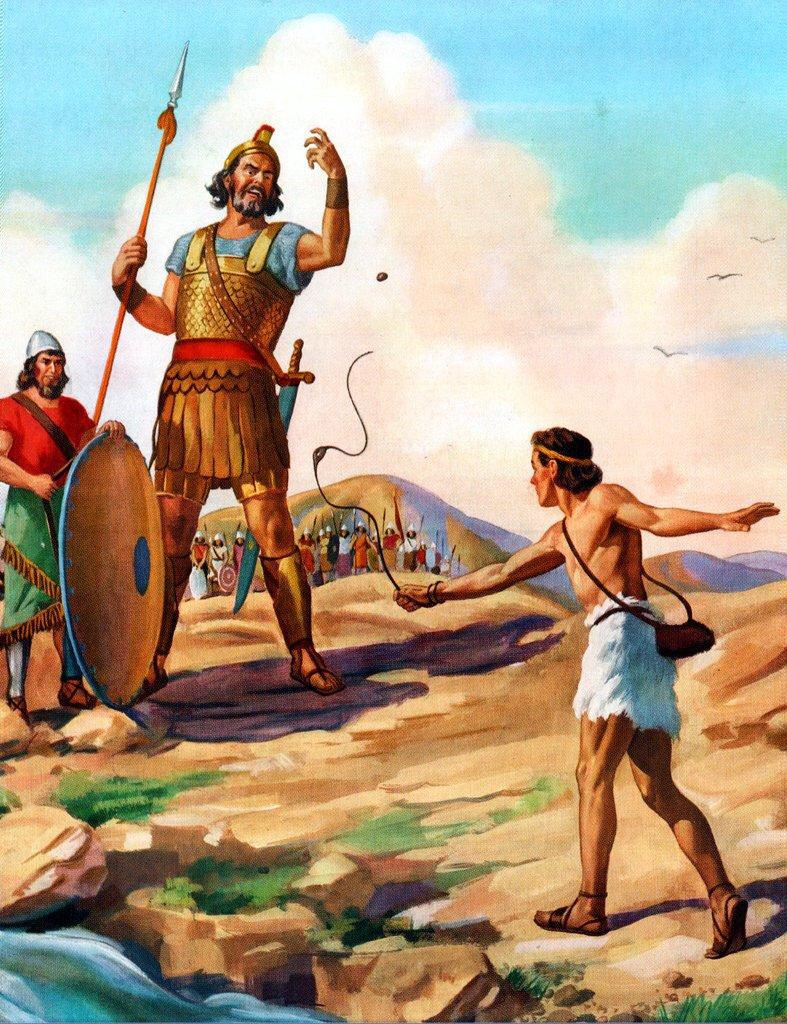
17:48 No sooner had the Philistine started forward to confront David than David darted out of the lines and ran to meet the Philistine.

17:49 Putting his hand in his bag, he took out a stone, slung it and struck the Philistine on the forehead; the stone penetrated his forehead and he fell face downwards on the ground.

17:50 Thus David triumphed over the Philistine with a sling and a stone; he hit the Philistine and killed him, though he had no sword in his hand.

17:51 David ran and stood over the Philistine, seized his sword, pulled it from the scabbard, despatched him and cut off his head. When the Philistines saw that their champion was dead, they fled.
We all know the story or think we know the story. Let’s look at it more closely. Goliath was obviously quite confronting. In modern measurements he stood 6foot 9inches tall. He was covered in armour. His breastplate weighed 45 kg. 
The first anomaly is that he had a shield bearer accompany him to the fighting ground. Why? Archers who have their hands busy with bow and arrow normally required a shield bearer to protect them. But an infantry man would normally carry his own shield. 
Second anomaly. Goliath on seeing the young and unsoldierlike David says “Am I a dog for you to come after me with sticks”. Why does Goliath see sticks (plural) when David was only carrying one stick?
Third point of interest is that Goliath then invites David to “…come over here”. He obviously wants to engage in hand to hand combat where Goliath has the distinct advantage. But it is suggested there may be another reason for this invitation. 
We have all heard of gigantism in children. It is caused by a tumour in the vicinity of the pituitary gland causing the overproduction of growth hormone. In adults this condition is called acromegaly. The symptoms of acromegaly are not only large hands and feet and significant height. In some cases the tumour also compresses the nerves between the eyes and the brain causing blurred and double vision. 
Commentators believe that Goliath suffered from acromegaly with reduced eyesight. His poor eyesight explains the need for a shield bearer walking in front of him. Not so much to protect him but to show him the way. He sees sticks in David’s hand because of his double vision. He beckons David to come closer not only to fight him at close quarters but to see him better. 
So we have an intimidating soldier of superhuman proportions. He is carrying heavy armour and is visually impaired. 
He is confronted by a stone slinger who is light and moves quickly and freely across the field of battle. Stone slingers in those times were quite lethal. Their accuracy was frightening. The speed they generated before launching their projectile was staggering. Writers at that time tell us that once stones were embedded in a victim’s skull they could not be easily removed. The Romans developed a tool resembling steel tongs that were used to remove such projectiles. 
Remember David had slain bears and lions to protect his sheep. 
Another important factor is that David was not prepared to fight Goliath on his terms. He was a shepherd not a soldier. He was a member of the artillery brigade not an infantryman. 
So in effect the story is about the slow and visually impaired soldier confronting a young and agile shepherd carrying the equivalent of a 45 Colt pistol. 
So when we compare the two who was the underdog?
When we look closely at the circumstances David had all the advantages. His disadvantages were his advantages. Goliath’s advantages were his disadvantages. 
Gladwell uses the story to drive home an important point. Studies show that underdogs rarely win when they fight on the terms that are confronting them – 10 – 15%. However when they change the terms and surprise their opponent their chances improve to a staggering 65%!!!

Rule of Law in the Lothair Crystal


Today I look at another object that is discussed in Neil MacGregor’s book The History of the World in 100 Objects. The object is pictured above. It looks like a broken plate but it is in fact a crystal depicting a noteable biblical scene. This scene deals with the universal issue of Justice of wrong being made right. 
The story goes that one day Susanna, wife of a wealthy merchant was bathing in a nearby river. Some men happened upon her and seeing her naked were entranced by her beauty. They approached her and demanded she have sex with them. She protested and her cries attracted the household servants who saw the men handling Susanna in a rough manner. 
The men were exposed and angry, if not a little frustrated. They pulled away from Susanna and alleged that they had caught her committing adultery with another man. This was a serious allegation from elderly and respected gentlemen. Susanna’s husband was most upset and ordered that his wife stand trial. 
Susanna protested her innocence but in her heart knew her fate was sealed as women were rarely exonerated through such trials. She received no sympathy from her husband. She faced certain death by stoning. 
Then arrived Daniel. He wished to question the gentlemen. Only one question each. He asked them separately under what tree did they find Susanna committing adultery? Each man gave a different answer and the deceit was exposed. Susanna was pardoned and the two men sentenced to death by stoning. 
To the left of the middle of the crystal you can see the men on the ground as others hurl stones at them. 
Who commissioned this crystal and why?
The crystal is an exquisite piece of work. Carved from a single crystal it relates the biblical story in eight separate scenes. The crystal is incredibly tough and cannot be chiselled, so the images were made over several painstaking months of grinding the crystal with sand. Inscribed on the crystal in Latin is “King Lothair caused me to be made”
The time is about 860 and we are in Western Europe. Many decades earlier Charlemagne, King of The Franks had created an impressive empire covering most of Western Europe. It stretched from northern Italy and covered modern France and Germany. 
At the time our crystal was made, Charlemagne had long died and his empire was in tatters. It had broken into essentially three parts. To the west was a kingdom situated where modern day France is located. To the east another large kingdom where Germany is now found and between them a smaller kingdom of Lotharingia belonging to King Lothair.  
King Lothair faced many challenges. Firstly, his uncles to either side were constantly threatening to overrun his kingdom and seize his land. Secondly, and more relevantly to our story of the crystal, King Lothair had difficulty conceiving a son to his wife,Theutberga. In fact, she bore him no children at all. No son, no heir. No heir, no kingdom. 
So King Lothair was faced with a problem not far removed from the one faced by Henry VIII some seven centuries later. 
As happens in human affairs, King Lothair had married the “wrong” woman. At the time of his wedding he had a long and enduring relationship with his mistress Waldrada who had borne him a son and a daughter. He wanted to divorce Theutberga and marry Waldrada. 
King Lothair needed a divorce in a Catholic Europe that did not readily accede to such requests. So he ordered his two bishops to annul the marriage on the grounds that Theutberga had committed incest with her brother. 
The bishops were equal to the task and managed to extract a confession from the Queen, no doubt through torture. But the wronged “Susanna” in our story appealed to the Pope who after a brief investigation exonerated her. 
We do not know the precise circumstances of the making of the crystal other than it was commissioned by King Lothair at the time of his unsuccessful royal divorce. Perhaps it was a peace offering to his wife. 
Interestingly, in the centre of the crystal there is an inscription beginning “Lotharius Rex…..” and meaning “King Lothair sits in judgment.” 
And this is the appeal of the crystal to me. It portrays the King sitting as a judge. It depicts a leader acting contrary to his own personal agenda and favouring the interests of justice, protecting the innocent that he himself perfected. It depicts the rule of law which all good leaders should uphold. 
The Lothair Crystal is perhaps the first depiction of the rule of law in continental Europe.  
Our own legal system has its origins as a King’s court where subjects appeared seeking equity and justice. Some of these historical origins remain with “Her Majesty’s Judges” and “Queen’s Counsel”
And what happened to King Lothair and his kingdom Lotharingia?
The King died in 869 without an heir. His greedy uncles to the east and west divided his land between themselves. All that remains of Lotharingia today, is Lorraine, which up until the Second World War was bitterly fought over by France to the west and Germany to the east. 

Things, the brain and the human history


The brain and the progress of history 

I am currently engrossed in Neil MacGregor’s The History of the World in 100 Objects. The book tells the history of the world through 100 objects currently on display at the British Museum. 
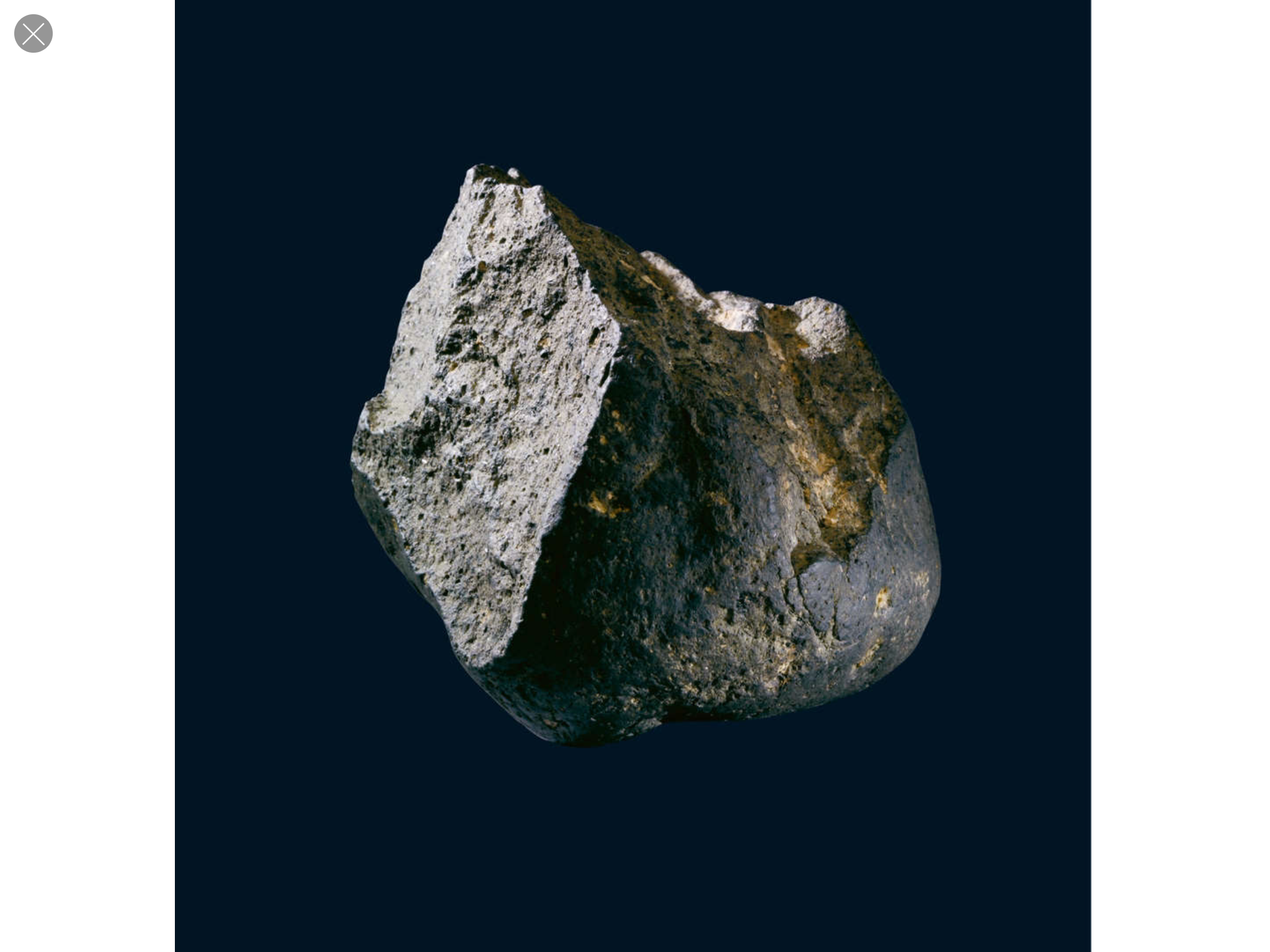
Today I want to talk about the oldest object at the Museum and the first one discussed in the book. It is the Olduvai stone chopping tool. It is between 1.8 to 2 million years old. It was discovered by Louis Leakey in the Olduvai Gorge in the north of Tanzania. It was among a range of items representing some of the oldest things ever found. 
The tool is pictured above. It has a sharp edge formed by chips taken out of the rock presumably by another rock. The top of the tool is rounded and fits comfortably in the palm of the hand. This simple tool tells us so much. 
First it shows humans making things to assist with everyday tasks. This in itself set us apart from the rest of the animal kingdom and represented a first step in the production of things of greater complexity, beauty, utility etc. 
The tool has 5 chips in one side and 3 on the other to give a sharp edge. One an imagine the thought processes that led someone to think that 2 chips were better that one and 3 were better than 2 and so on.
Hand in hand with the creation of things is the desire to improve them, to make them better. 
The tool would have been used to chop flesh from a carcass, to debark a tree, to cut roots and even to break bones and extract marrow. 
Importantly one advancement leads to others. And so humans progress. 
This brings me to the point of this blog. I think it was Churchill who that we shape our buildings and thereafter they shape us. Similarly we make our tools and our tools make us. 
The last book that enthralled me to the same degree was Norman Doidge’s The Brain that changes Itself. The premise of the book is that the brain is always changing and adapting. The book documents the recovery and rehabilitation of brain injury patients. Their transformation is due to the brain’s ability to change its own structure and to compensate after significant injury. The book takes us into the fascinating world of neuroplasticity. 
For centuries physicians and scientists alike thought that the brain was a fixed and unchanging mass and people sustaining injury to parts of their brain therefore had no scope for repair or rehabilitation or recovery. The book describes the amazing recovery of a number of brain injured patients who have “trained” their brains to overcome their injury. 
In short the brain is dynamic not a fixed and unchanging mass. 
I believe this dynamism is responsible for our progress as human beings, more so than evolution, if what I am talking about is not evolution. 
Take the human who fashioned the Olduvai stone chopping tool. One week they are using the tool to remove skin from a carcass. The next week they are using it to cut up cooked food. The next week they develop an axe to chop wood. The following week they discover that a sharp edged implement can help kill prey. Later they learn that this killing tool can be deployed from a distance, thus increasing the chance of success. 
What I am postulating is that our progress has been the result of our brain interacting with things we make to change the way we interact with our world. 
Take for example an important modern invention such as the automobile. The automobile caused humans to consider how they moved around their environment. In many ways it challenged us. The skills and intuition relevant to commuting by foot or by horse and cart were swept aside as humans developed the eye and hand co-ordination and peripheral vision necessary to operate a motor vehicle.No doubt this involved the brain in developing new neural pathways and activating brain centres in new ways. 

What I am talking about is happening today. How many of us are trading in handwriting and calligraphy skills for keyboard skills? How many of us are moving away from books to screens? How often do we walk down a busy street and see others negotiating human traffic while staring down at their smartphone? Is this is a new way of walking?

 
I believe the things we make, change us as we change them. 
Two million years ago it was a stone chopping tool, today it is a smartphone. Same brain. Sort of. 
 

George Pell

  
Picture courtesy of the ABC
George Pell
Last week Australian Catholics watched their Cardinal give evidence (from Rome) in the Royal Commission into Institutional Responses to Child Abuse. This is not the first time Pell has given evidence to the Royal Commission but it was perhaps the most interesting because the Commmision’s questions covered Pell’s time at Ballarat, during the infamous reign of Father Ridsdale and other pedophile priests. 
Pell was apparently not well enough to travel to Australia for the Royal Commssion. Instead he was interrogated by video from the Vatican. 
The whole week was totally unsatisfactory. Pell stopped short of any genuine apology to the victims, some of whom flew to Rome to witness his testimony first hand. Pell’s performance was also disappointing. His tough and arrogant exterior, which no doubt assisted his rise through Church ranks, did not assist him under the spotlight of the Commssion. For the most part, Pell came across as uncaring and sometimes insensitive. 
This was not only disappointing for the victims but also for the faithful back home who were (desperately) looking for a sign acknowledging the wrongs of the past, a plea for forgiveness and mercy and a beginning to the healing process. 
The following Sunday, our parish priest reflecting on the week’s events expressed regret and frustration at the “betrayal” committed by the Church hierarchy in days gone by. He was so distraught by what he saw being telecast from Rome that he broke down in front of his congregation, abruptly concluding his homily as he collected himself and wiped away his tears. 
For me, I never thought I would see the day when representatives of the Church, even at a parish level, would acknowledge the sins of the past, let alone a priest humble himself in front of his flock. Such must be the depth of feeling among young and honest priests seeking to spread God’s word and grace in these dark times. 
But there is a silver lining, one that Pell may live to regret. His reluctance to leave the Vatican has meant that the Royal Commission has come to the Vatican. As The Age religion writer, Barney Zwartz wrote recently;
“So now the Australian problems have landed in an unwelcome steaming pile on the 

Vatican doorstep, and pressure is mounting on the Pope himself”
Cardinals have to offer their resignation to the Pope when they turn 75. Pell turns 75 in June this year. Most assumed he would stay on to continue his reforms. We now watch with interest. 

Refugee Shame


Last Thursday night I attended a Q & A session hosted by the Australian Lawyers for Human Rights and LaTrobe University. It featured an “all star” panel comprising Anna Burke member for Chisolm, Sarah Hanson-Young Greens senator, Julian Burnside QC, David Manne, human rights lawyer and Dr Savitri Taylor, lecturer LaTrobe University. 
It was a sellout event.
I want to share with you the insights I gained from the evening and the feeling of shame and despair I left with. But before I do I want to discuss briefly a basic and important legal principle. I hope it will provide some context to the concern I have (we should all have) over this governments’ and previous government’s treatment of the refugee crisis gripping this country and the world.
The principle is the Rule of Law. What is it? Why is it important?
The principle had been discussed and explored since Aristotle’s time. The Magna Carta was the first implementation of the principle in English law. 
It seeks to prevent arbitrariness by leaders and governments and prevent the indiscriminate exercise of power. It is intended to make governments accountable for their actions. 
  There is no universally accepted definition but there is universal acceptance of

the following elements. 
 (1) that the people (including, one should add, the government) should be ruled by the law and obey it and (2) that the law should be such that people will be able (and, one should add, willing) to be guided by it.
Over time it has included the separation of powers, and independent judiciary, democratically appointed law makers, an open and transparent law making process, equality before the law, liberty for all, free speech, free assembly, presumption of innocence, trial by jury, right to legal representation, right to a fair hearing etc.
In some countries these “rights” are enshrined in a bill of rights or a constitution.
In Australia, we do not have a bill of rights but we do have a constitution that includes some of the above.
Rule of law is intended to be the unwritten rules and principles that govern the actions of decision makers in our society. I have always thought that Australia was “safe” because the Rule of law was alive and strong.
I don’t think that any more. 
This is what I learned last Thursday evening. 
1. There are 30,500 refugees in indefinite detention in Australia and at off-shore processing centres. This includes about 2,000 children. The fact that we say “about” is an indictment in itself. Why don’t we know the precise number?
2. Some refugees are held (indefinitely) in suburban centres in major cities. There is probably a centre within 10 km of you now. 
3. 1,459 people are held on Nauru and Manus Islands
4. The cost of the government’s asylum seeker policy is difficult to measure because money is taken from a number of departmental budgets. But it has been estimated at $5 billon per year. 
5. Take an alternate policy where we agreed to keep asylum seekers in detention for no more than a month (in Australia) for health and security checks and then released them into the community (particularly regional centres) with no welfare benefits but an ability to find jobs. They would then be required to report regularly until their application was finalised. The estimated cost of such a program would be $500 million. Being 1000th of the current cost.
6. The town of Nihill has been revived by resettled refugees. The local duck factory Luv-A-Duck was facing certain closure before resettled refugees and a revived spirit by locals brought it back to almost full production. 
7. Our regional centres are calling out for assistance as young and old desert the country for the major cities. The Nihill story can be replicated elsewhere. How many of you are familiar with the Nihill revival story? With any “good news” refugee story?
8. In the late 1970s, when confronted with a large influx of refugees from Vietnam, the Fraser government opted to resettle them in a humane manner. Simple as that. No deterrence. No border protection. Leadership par excellence.
9. In contrast in 2015, when the world was appalled by the sight of 3 year old Aylan Kurdi washed up on the shore of Turkey, Tony Abbott was asked what will Australia do to help? He said that he thought Australia was already doing enough. It was only public pressure that saw him agree to accept any Syrian refugees. No leadership.
10. The world is facing a refugee crisis greater than the crisis after World War II.
11. If we wish to reduce the influx of refugees, it would help to stop waging war in their country. It would help if we didn’t slash foreign aid.
12. The current oppressive asylum seekers policy has been developed by both major parties over 25 years. It has sunk to greater and greater depths of inhumanity by measured incremental steps. 
13. Currently asylum seekers are faced with indefinite detention. Some have been in detention for more than 7 years. 
14. To secure a temporary visa refugees are required to complete, in English, a 62 page form containing 184 questions. 
15. Their fate literally depends on them completing the form correctly. Regulations prevent amendments to the form at a later time. 
16. The government has slashed to nil all Legal Aid for migration work. As such refugees depend on volunteers to assist them. 
17. If you wish to visit a detention centre you need to ring in advance, state who you wish to see and make an appointment. Often times requests to visit are turned down. 
18. Anna Burke and Sarah Hanson-Young reported that even politicians are asked to leave their phones at reception and not to talk to the detainees when they visit detention centres. 
19. In 2014, the Abbott government issued a directive to all ministers and federal public servants that from hereon, detainees were to be referred to as “illegal”. This is despite the fact that the term “illegal” does not appear anywhere in the Migration Act. Almost overnight the press and media were filled with stories of illegal arrivals. Asylum seekers were portrayed as queue jumpers. Rule breakers. Cheats. NOTHING IS FURTHER FROM THE TRUTH. 
20. Australia has a dual system. While we are signatories to a number of UN treaties and conventions, including the Convention on Refugees, the terms of these treaties and conventions do not become Australian law until they are ratified by the Australian parliament. No ratification means there is no need to comply. 
21. In fact, the Abbott government has revoked legislation that previously ratified some UN conventions. 
22. The recent High Court decision validating offshore detention centres was no surprise to human rights lawyers. After the challenge was commenced the Abbott government introduced legislation to close all loopholes and defeat any challenge. The legislation was to operate retrospectively. 
23. Sarah Hanson-Young related the “passing” of the legislation. Parliament’s winter term was to close on the Thursday (in June). Canberra was as usual for that time of year, cold and miserable, and the politicians were keen to return home. On the Wednesday afternoon, the bill was introduced into the House of Representatives. It was not first reviewed by any committee. It had bipartisan support. It was passed quickly by the House of Representatives with minimal debate. The next day the Greens sought to hold up the passage of the bill in the Senate. They proposed amendment after amendment until about 1.00am Friday morning when a vote was called and the bill became law. 
24. Australia’s treatment of asylum seekers breaches all UN conventions dealing with refugees. Australia is guilty of gross contraventions of human rights. Australia’s behaviour would not be accepted by their European trade partners. It is the Australian government that is acting illegally not the asylum seekers. 
24. Asylum seekers are not entitled to collect benefits or to work. 
25. Those visiting refugees in detention centres have reported an alarming deterioration in mental health. 
26. The process is designed to crush their spirit so that they “volunteer” to return home. 
27. Since when have people fleeing from trouble become trouble themselves?
28. There is no logic to the current policy. Think about it. If we are concerned about people undertaking hazard maritime journeys, why would we turn boats around in the middle of the ocean? Why don’t we conduct search and rescue operations when boats capsize?
29. If we wish to stamp out villainous people smugglers, why would we treat with them and pay them to turn their boats around?
30. If it is about security, do we need to crush those who have passed all security checks? The Fraser government response to the refugee crisis after the Vietnam war did not compromise Australia’s security. Today we have far more “intelligence” and better systems to process refugees. 
31. If it is about deterrence, why is it about deterrence? Why do we want to discourage people from coming here? Have we run out of space? Have we run out of resources? (Remember this policy is costing us $5 billion per year). Australia is no backwater country. Those wishing us harm know there is every chance they will get caught. Why risk it? 
32. The logic of deterrence is inhumane. It means the harsher and more harmful processes will be more successful. As such we have successive governments competing between themselves to see who can be the most cruel in the interests of deterrence. 
33. Should we harm children, as we do, in the interests of deterrence?
34. David Manne explained that the government is engaging in CONSCIOUS CALCULATED CRUELTY. Think about it. Would we tolerate such policies in Nazi Germany, Soviet Russia, Communist China, Uganda, Rwanda, South Africa, Cambodia, Sierra Leone, Guantanamo Bay……?
35. Why are we prepared to lock people up indefinitely? Being people who have committed no crime. Being people for all intents and purposes who are good people. Why do we want to crush their spirit? To demonise them? How have we come to this?
35. The Australia I know is warm and generous. We are a nation of immigrants. We have one of the most successful multicultural societies in the world. Multiculturalism delights in difference and condemns discrimination.
36. Notwithstanding Australia is antipathetic towards the plight of the refugees in our midst. Antipathetic to the gross violation of human rights. Antipathetic towards the inhumanity of our government.
37. There is no such thing as casual racism. Racism is racism.
38. Anna Burke is retiring from politics at the end of her current term. Recently she was campaigning in Box Hill and in her team were a group of second generation Chinese. Box Hill has a strong Chinese population. A passerby shouted out to a team member “Go home you chink!” To which he responded “Where, Nunawading?”
39. When the Tampa crisis was burning hot, Burke received more correspondence about the livestock transport ship The Comora than she did about Tampa.
40. Burke’s electorate covers a number of Universities and educational institutions. Her electorate is well educated. But to this day, she receives more mail about live sheep exports than she does about refugees and detainees.
41. Aladdin Sisalem was born in Kuwait to Egyptian parents. During the Iraqi war he was detained by authorities and tortured. He fled detention and worked his way to Indonesia where he boarded a boat for Australia. His boat was intercepted by the Australian Navy. He was placed in detention on the PNG’s Manus Island. In 2003, he was the last detainee left on the island. His parentage (his father was Palestinian from Egypt) created distrust among authorities. Legal attempts to relocate him to Australia had failed. So Aladdin wandered the island by himself (under the watchful eyes of Australian authorities). No one cared about him. Then the press learned that it was costing taxpayers $25,000 a day to keep Aladdin on Manus Island and he was brought back…..quickly. John Laws, Sydney shock jock, came to learn that Aladdin had left behind his cat “Honey” and he began a radio campaign to raise money to bring Honey home. The campaign eventually reunited Aladdin with his cat. …. I am not making this up.
42. Every week Sarah Hanson-Young receives hate mail and death threats because of her position on asylum seekers.
43. There is no Rule of Law when it comes to making decisions on the fate of refugees or dealing with their liberty.
44. The fundamental principle being that governments should do no harm, is missing in Australia. No one seems concerned. We keep electing the major parties despite their inhumanity to refugees.
45. Shame Australia Shame.

U.S. election – pt 2

    
Picture courtesy of biography.com
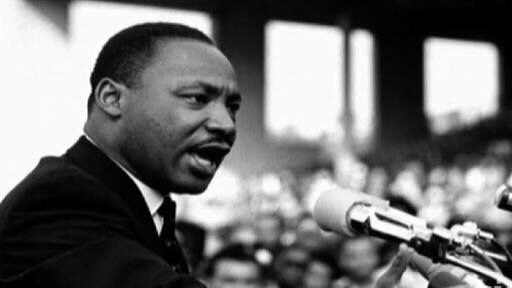
The next important speech I believe is “Other America” by Martin Luther King delivered in 1968 a few months before his assassination.

The speech is famous for the expression

“a kind of socialism for the rich and rugged hard individualistic capitalism for the poor.”

King was describing the many benefits given to whites to better themselves, being opportunities not given to blacks. 

We have a similar crisis emerging today, where the gap between rich and poor is increasing. 

http://genius.com/Martin-luther-king-jr-the-other-america-annotated

King was keen to repair the social fabric by providing opportunities for everyone. This sentiment is as important today as it was back then. He knew it was a difficult struggle. 

U.S. Presidential election  – Pt 1


Picture courtesy of history.com

 2016 is likely to be viewed as a watershed year because of the forthcoming US Presidential election.  A watershed year marks a turning point in history. 

While the election is not until November, people are already concerned about the quality of the candidates. 

The next president will need to deal with a range of emerging issues that will challenge even the best leaders and visionaries. The situation in the Middle East is growing less stable with each passing month. The growing hostilities have already dragged in Russia and threaten to draw in others, dare I say China. What will happen then?

The world economy is looking tired and worn. China has huge internal issues with its markets. The west is only seeing the tip of the iceberg. When China stops, the rest of the world crashes. Europe is a basket case propped up by German goodwill. There does not appear any way forward other than divisive austerity. Is there another way? How long can the Germans hold back the dyke?

In the US, things are superficially okay but any close examination will reveal a gaping divide between rich and poor. The gap between the haves and have-nots grows with each passing year. The country is on edge because of the terrorist threat. A trillion dollars is spent each year on defence and border control. Gun violence is on the increase. Those opposing gun control seem to have an insuperable task. Local tensions are likely to result in greater violence as the people of the US come to a landing on this issue. A bad decision by the people at the election may plunge the country into chaos. 

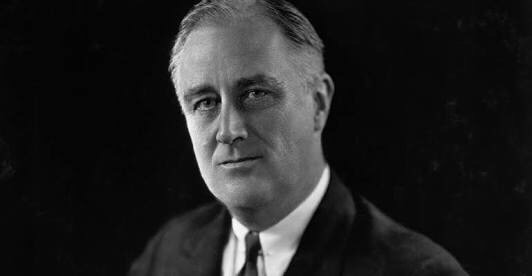
But I am hopeful. There is an alternative for the US. In finding that solution I take you back to FDR. Roosevelt is one of my favourite presidents having lifted his country out of the depression and set them onto the path to prosperity. In 1944, his State of the Union speech addressed the issues of the US at war and post war recovery. At the end of the speech he set out a bill of economic rights. 

The speech is largely forgotten even though the bill of economic rights should be pinned to every politician’s wall. Read and be impressed. 

http://www.fdrlibrary.marist.edu/archives/address_text.html
More to come.